
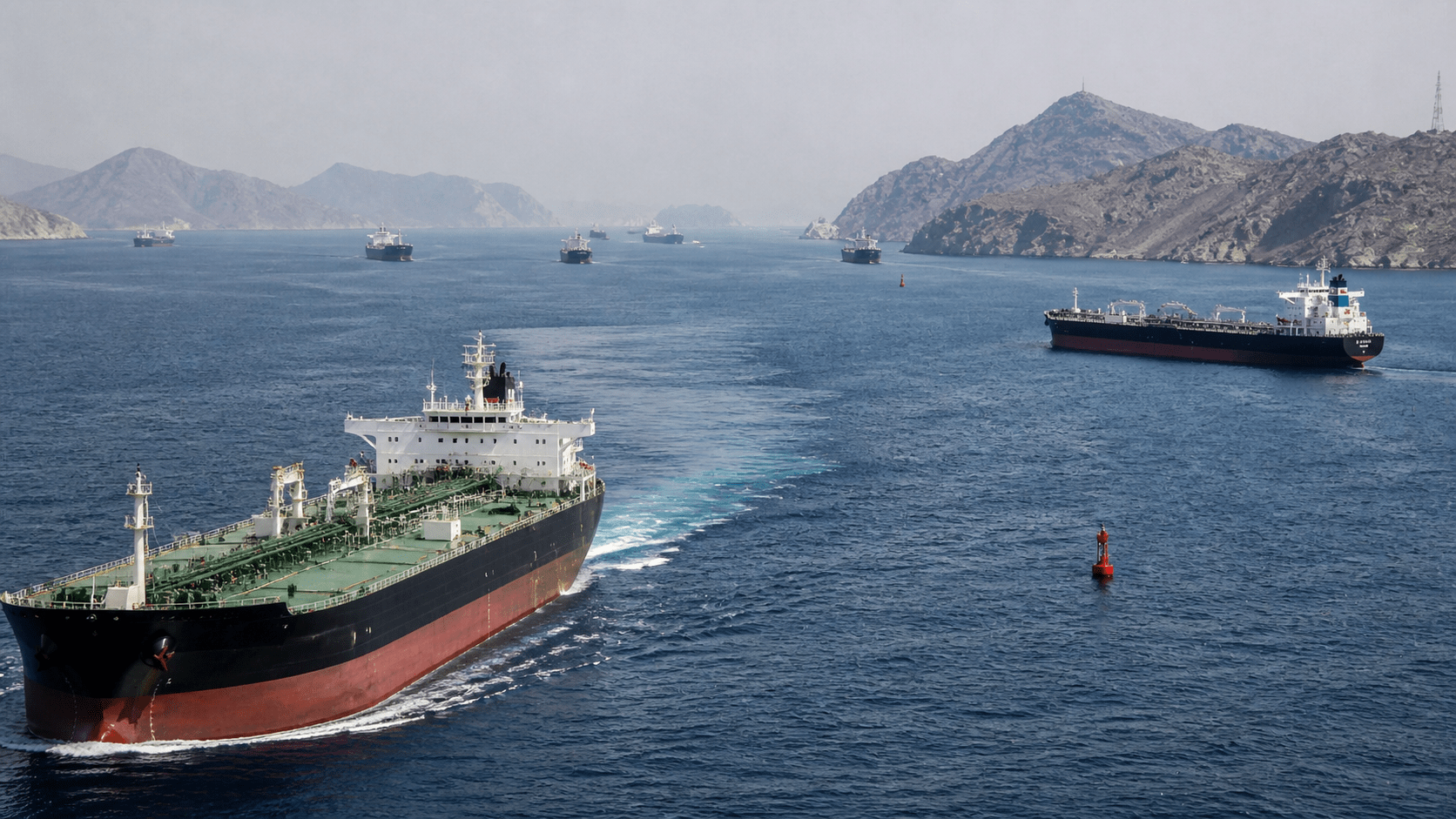
Oil prices pulled back below the $100 threshold, but global energy markets remain under significant pressure as the Strait of Hormuz stays largely closed to commercial traffic despite a recently reached ceasefire agreement between the United States and Iran.
U.S. West Texas Intermediate crude futures fell 1.5% to around $96.37 per barrel after briefly topping $100 earlier in the session. International benchmark Brent crude also declined, dropping 1.3% to $94.69 per barrel.
Trump Pressures Iran as Ceasefire Hangs in the Balance
President Donald Trump intensified his rhetoric against Iran on Friday, warning that Tehran has “no cards” to play and demanding an immediate end to what he described as the extortion of the world through the blocking of international waterways.
“The Iranians don’t seem to realize they have no cards, other than a short term extortion of the World by using International Waterways,” Trump wrote in a Truth Social post. “The only reason they are alive today is to negotiate.”
Trump also accused Iran of doing a “very poor job” of allowing oil to move through the strait, adding further uncertainty to a ceasefire deal that was supposed to hinge on reopening the critical shipping lane.
The two-week ceasefire, reached on Tuesday, was conditioned on Iran allowing vessels to transit the strait. Despite that agreement, shipping flows through the chokepoint remain severely restricted, with reports indicating that most ships passing through in recent days were linked to Iran.
Shipping Still Effectively Halted
Industry operators on the ground say the situation has not meaningfully improved since the height of the conflict.
Adrian Beciri, CEO of DUCAT Maritime, a Cyprus-based logistics firm, told CNBC that the strait remains effectively closed and that the behavior of shipowners and operators is “exactly the same today” as it was at the peak of the war.
Beciri described the environment as “extremely chaotic,” noting there is no established way to transit the waterway and no clear method to contact Iranian authorities for guidance. He also said the costs being quoted to shipowners attempting to navigate the route have become, in his words, “quite frankly ridiculous.”
Kevin Hassett, one of Trump’s top economic advisers, said Thursday that getting even a single oil tanker through the strait successfully would provide a significant boost to global supply, describing it as a “huge chunk of what’s missing.”
Saudi Arabia’s Energy Infrastructure Under Attack
Adding to the supply crisis, Iranian strikes have caused significant damage to Saudi Arabia’s oil production and export capacity.
Attacks on the Manifa and Khurais oil fields in Saudi Arabia have cut the kingdom’s output by roughly 600,000 barrels per day, according to the Saudi Press Agency. A pumping station along the key East-West Pipeline was also struck, trimming flows by approximately 700,000 barrels per day.
That pipeline had become Riyadh’s primary export route as the conflict made Strait of Hormuz shipments increasingly unviable. With both that alternative route and the strait now under pressure, Saudi Arabia’s ability to compensate for the broader supply disruption has been seriously constrained.
Several Saudi refineries have also been targeted in recent strikes, compounding the damage to the kingdom’s energy infrastructure.
Markets Brace for a Prolonged Supply Shortage
With Gulf oil imports dropping sharply and voyage times for alternative routes stretching across several weeks, analysts warn that global buyers may need to rely on existing stockpiles and non-Gulf sources of supply for at least another month.
Goldman Sachs analysts noted that even as higher fuel prices begin to weigh on demand, the supply disruption remains severe enough that no quick resolution is likely.
The ceasefire has offered a measure of short-term relief to markets, but the gap between the agreed terms and the reality on the water is keeping traders cautious. Until commercial tanker traffic resumes at something close to normal levels, energy markets are unlikely to fully stabilize.



0 Comments