
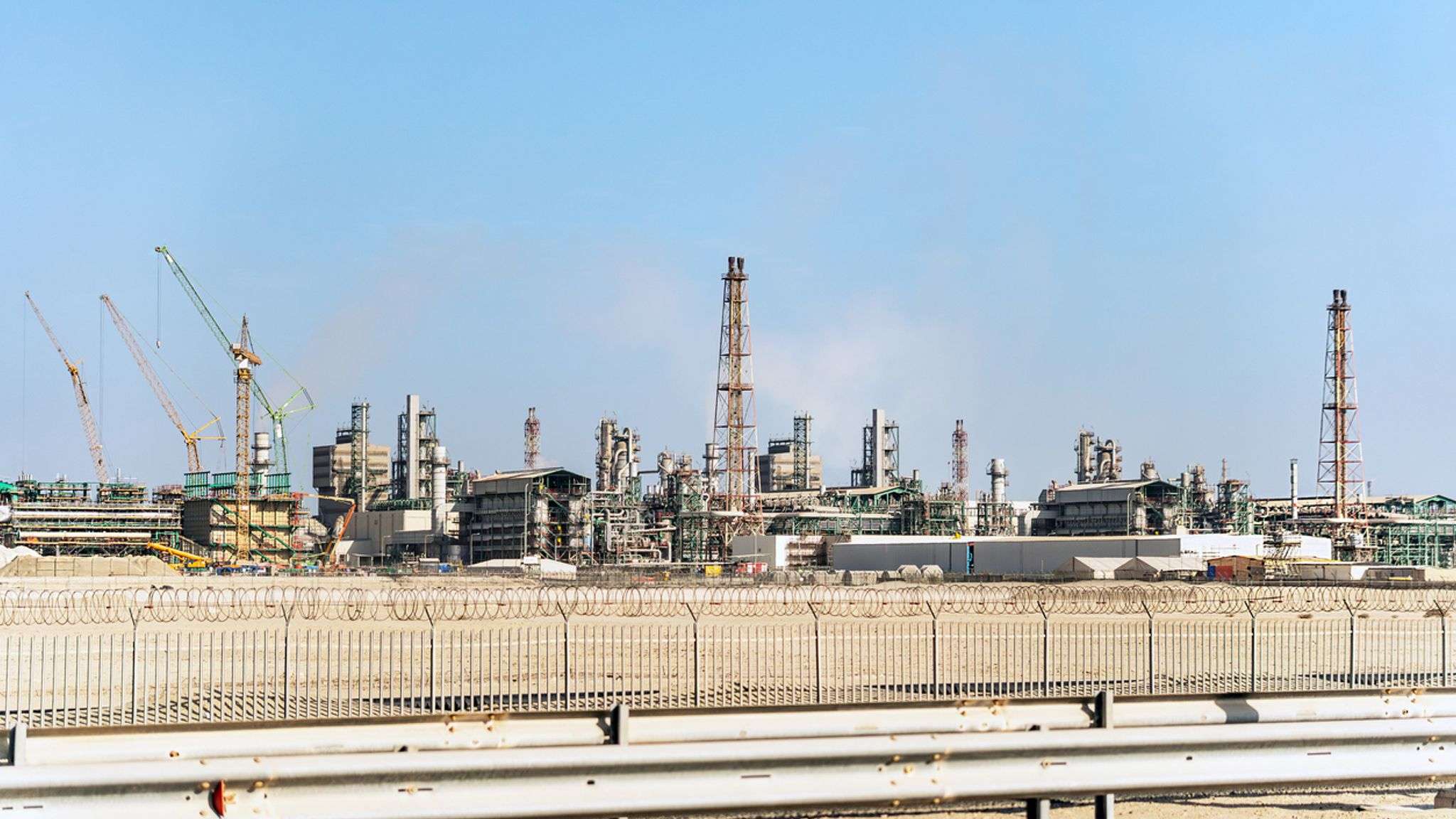
Oil prices are climbing sharply as the conflict involving Iran enters its fifth week, with growing fears that supply disruptions could worsen.
Crude benchmarks have already surged above $100 per barrel, reflecting increasing concern among traders and analysts that the situation may escalate further and tighten global energy markets.
Supply risks are driving the surge
The primary factor behind rising oil prices is the threat to global supply.
Key shipping routes in the Middle East, which are critical for transporting oil worldwide, are now facing significant disruptions.
These risks are creating uncertainty in the market and pushing prices higher.
Strait of Hormuz disruption remains critical
One of the most important developments is the effective closure of the Strait of Hormuz, a major artery for global oil shipments.
This route typically handles a large portion of the world’s oil supply, and any disruption can have immediate global consequences.
The reduced flow of oil through this strait has already tightened supply conditions.
Additional chokepoints increase pressure
Beyond the Strait of Hormuz, another critical shipping route is also under threat.
The Bab el-Mandeb Strait, located between Yemen and Djibouti, has become a growing concern due to escalating tensions involving regional forces.
If this route is disrupted, it could further restrict oil supply and intensify the current crisis.
Limited alternatives for oil transport
Countries are attempting to reroute oil through alternative pathways, but these options are limited.
Saudi Arabia’s East-West Pipeline, for example, is already operating at full capacity, leaving little room to increase supply through alternative routes.
This lack of flexibility is contributing to higher prices.
Shipping risks and costs are rising
The conflict is also increasing risks for shipping companies operating in the region.
Insurance costs for transporting oil through affected areas are rising, and some shipowners are avoiding these routes altogether.
These factors add to the overall cost of delivering oil to global markets.
Geopolitical tensions add uncertainty
Political developments are further fueling market volatility.
Statements from U.S. leadership about potential military actions and ongoing negotiations have created uncertainty about how the conflict may unfold.
This uncertainty is making it difficult for markets to stabilize.
Military escalation raises stakes
The presence of additional military forces in the region is another factor influencing oil prices.
Increased troop deployments and discussions of potential strikes on energy infrastructure have heightened concerns about supply disruptions.
Such actions could lead to immediate and significant impacts on oil production.
Market reaction reflects growing concern
The oil prices Iran war surge is a direct reflection of how sensitive energy markets are to geopolitical events.
Even the possibility of further escalation is enough to drive significant price movements.
Traders are responding quickly to any new developments.
Potential impact on global economy
Rising oil prices can have widespread effects beyond the energy sector.
Higher fuel costs increase transportation and production expenses, which can lead to higher prices for goods and services.
This can contribute to inflation and slow economic growth.
Outlook depends on conflict trajectory
The future direction of oil prices will largely depend on how the conflict evolves.
If tensions ease and supply routes reopen, prices may stabilize or decline.
However, continued escalation could push prices even higher, prolonging the current surge.
A fragile energy market
The current situation highlights how vulnerable global energy markets are to geopolitical disruptions.
With limited spare capacity and multiple chokepoints at risk, even small changes can have large impacts.
As the conflict continues, markets are likely to remain volatile, with the oil prices Iran war surge shaping economic conditions worldwide.



0 Comments