
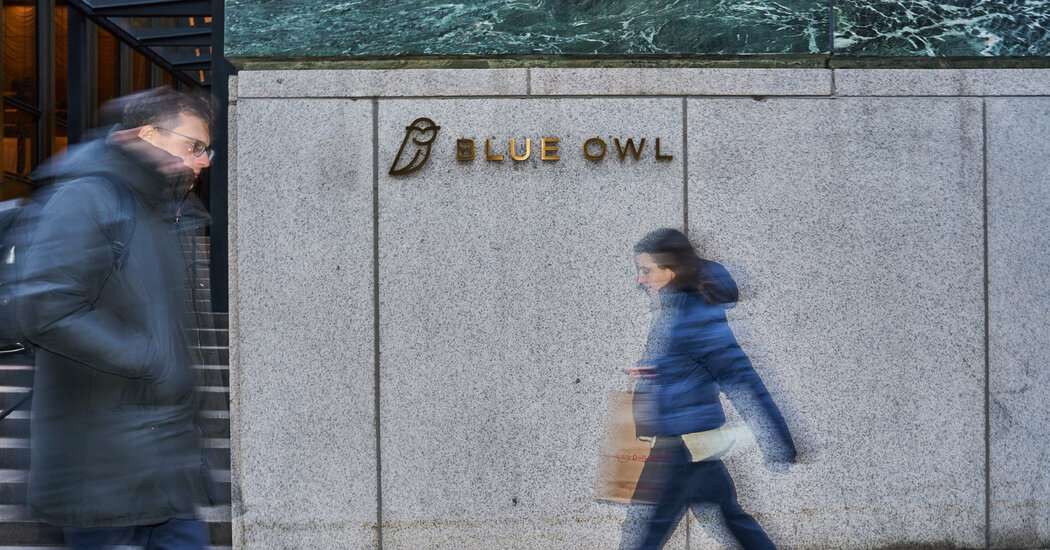
Concerns about the stability of private credit markets are intensifying after recent developments involving a fund managed by Blue Owl Capital.
The company announced that investors seeking to withdraw money from one of its private credit funds will need to wait while the firm sells portions of the fund’s loan portfolio to raise liquidity.
The move has prompted debate among investors and market experts about whether the situation reflects isolated fund management decisions or a broader warning sign for the rapidly expanding private credit sector.
Private credit markets have grown quickly over the past decade, attracting investors searching for higher returns than those available in traditional bond markets.
However, the structure of these funds can also make it difficult to quickly return money to investors during periods of stress.
Liquidity Delay Raises Investor Concerns
Blue Owl said it plans to sell approximately $1.4 billion of lending investments from the affected fund in order to generate liquidity for shareholders requesting redemptions.
Private credit funds typically lend directly to businesses outside traditional banking channels. Because these loans are not easily traded on public markets, managers may need time to sell assets before paying investors who want to withdraw.
The decision to delay withdrawals has triggered anxiety among some market participants who worry that similar issues could appear across the broader private credit ecosystem.
The reaction was visible in financial markets as shares of several alternative asset managers declined.
Asset Managers See Share Price Declines
Exchange-traded funds tracking major private asset firms also experienced declines following the news.
The VanEck Alternative Asset Manager ETF, which tracks companies involved in private markets, dropped more than three percent during the week.
Several major asset managers included in the index also saw their shares fall, including Brookfield Corporation, Blackstone, KKR, Apollo Global Management, and Ares Management.
Shares of Blue Owl itself dropped sharply, reflecting investor concerns that the situation could indicate deeper challenges in the credit market.
Comparisons to Past Financial Crises
Some analysts have drawn cautious comparisons between current private credit worries and the early warning signs that appeared before the global financial crisis of 2007 and 2008.
That crisis began with the collapse of the U.S. subprime mortgage market and eventually triggered a severe global recession.
The private credit market today is far smaller than the mortgage market was at the time, but similarities in leverage and liquidity risks have sparked debate among market watchers.
Mohamed El‑Erian raised the question of whether the Blue Owl situation could represent a “canary in the coal mine” moment for the industry.
While he noted that the systemic risks appear much smaller than those that existed before the financial crisis, he warned that valuations in certain private assets may still face significant pressure.
Warnings From Market Veterans
Other prominent investors have also raised concerns about the rapid growth of private credit.
Jeff Gundlach has warned that recent developments may signal increasing stress in the sector.
Meanwhile, Jamie Dimon previously cautioned that rising defaults among specialized lenders could indicate broader problems within the lending ecosystem.
Last year’s bankruptcies involving companies such as Tricolor Holdings and First Brands Group added to these concerns by highlighting potential weaknesses in certain lending portfolios.
Such incidents have prompted investors to question whether underwriting standards across parts of the private credit industry may have loosened during the sector’s rapid expansion.
Why Private Credit Attracted So Much Capital
Despite the current worries, private credit has grown rapidly because of the attractive returns it has offered investors.
In many cases, funds lend to companies at higher interest rates than those available in traditional bond markets.
These loans are often structured to provide steady income through interest payments, which are then distributed to investors as dividends.
Business development companies, commonly known as BDCs, have played a major role in this growth. These entities raise money from public investors, lend the capital to businesses, and distribute income generated by the loans.
Blue Owl is one of the largest managers of such investment vehicles in the United States.
A Test for Private Credit Markets
The developments surrounding Blue Owl private credit fund concerns may ultimately prove to be an isolated case rather than a sign of widespread problems.
However, the episode highlights some of the structural risks associated with private credit investments.
Because these funds hold loans that cannot easily be sold, investors may face delays when trying to withdraw money during periods of stress.
For many market participants, the situation serves as a reminder that higher returns often come with reduced liquidity and greater complexity.
Whether the Blue Owl episode becomes a temporary scare or an early warning sign for the broader market will likely depend on how the private credit industry manages rising investor scrutiny in the months ahead.



0 Comments