
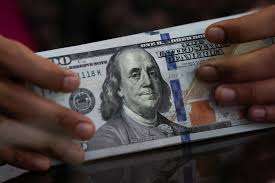
The U.S. dollar may no longer hold the same level of safe-haven strength it enjoyed in recent years, according to a new report from ING.
While the currency has lost part of its defensive appeal during market turbulence, analysts say global demand for the dollar remains intact, suggesting the shift is more cyclical than structural.
Dollar Weakness Reflects Policy Uncertainty
ING analysts noted that the dollar index fell nearly 10% last year, marking its weakest annual performance since 2017. The decline coincided with volatile trade policy decisions, tariff threats toward allies, and increasing political pressure on the Federal Reserve.
These developments altered the traditional relationship between the dollar and risk assets. Historically, investors have rushed into the greenback during market stress, but ING’s analysis shows that correlation patterns have shifted.
The report measured a three-month relationship between the dollar index, U.S. equities, and Treasury yields, finding that the currency’s safe-haven behavior weakened compared with 2024.
Despite these changes, analysts emphasized that the dollar has not lost its global dominance. Instead, the current softness appears tied to short-term macroeconomic dynamics rather than long-term structural decline.
Investors Continue to Hold U.S. Assets
One of the strongest arguments against a full erosion of safe-haven status is continued investment in U.S. markets. Private investors still account for more than 80% of foreign holdings of U.S. assets, indicating that global capital flows remain anchored to American financial markets.
ING said there is no clear evidence of accelerating de-dollarization, a trend that many analysts feared could gain momentum amid geopolitical tensions and shifting trade relationships.
The dollar’s share in global transactions, assets, and liabilities remains broadly stable, reinforcing the view that its role in the financial system is still secure.
This suggests that recent dollar weakness may reflect temporary shifts in sentiment rather than a lasting change in investor behavior.
Federal Reserve Independence Remains Key
The report highlighted Federal Reserve independence as a critical factor supporting confidence in the U.S. currency. Analysts warned that if markets perceive the central bank as cutting interest rates for political reasons rather than economic fundamentals, the dollar could face more severe pressure.
ING cautioned that a scenario in which monetary policy loses credibility could trigger a rapid decline in investor confidence. In extreme cases, such a loss of trust could even lead to a “run on the dollar,” though analysts described that outcome as unlikely under current conditions.
Market participants continue to watch U.S. interest rate expectations closely, as rate policy remains one of the most powerful drivers of currency performance.
Cyclical Forces Drive the Current Outlook
ING’s outlook suggests that the dollar’s recent performance reflects cyclical factors tied to global growth expectations, shifting trade dynamics, and investor risk appetite. Rather than signaling a long-term decline, the currency’s behavior appears consistent with a period of adjustment following strong gains in previous years.
The firm expects the euro to strengthen modestly by the end of the year, forecasting a move toward $1.22 from around $1.18 currently. Even so, ING does not anticipate another decline as steep as the drop seen last year.
Analysts argue that the dollar’s global role is deeply embedded in financial markets, making a sudden structural shift unlikely. Instead, fluctuations in trade policy, interest rate expectations, and geopolitical tensions are likely to drive near-term volatility.
Safe Haven Status Is Evolving, Not Disappearing
The broader takeaway from ING’s report is that the dollar’s safe-haven appeal is evolving rather than disappearing. Investors are reassessing traditional risk dynamics as global markets adjust to new economic realities, including changing trade policies and shifting central bank strategies.
While uncertainty around tariffs and monetary policy has introduced new challenges, the dollar continues to benefit from deep capital markets, strong liquidity, and widespread global usage.
For now, analysts say the currency remains a cornerstone of the financial system, even as its role during periods of market stress becomes more nuanced.


0 Comments